Chalky Residue on Stucco or Siding? What Sun-Faded Paint Means
August 25, 2026
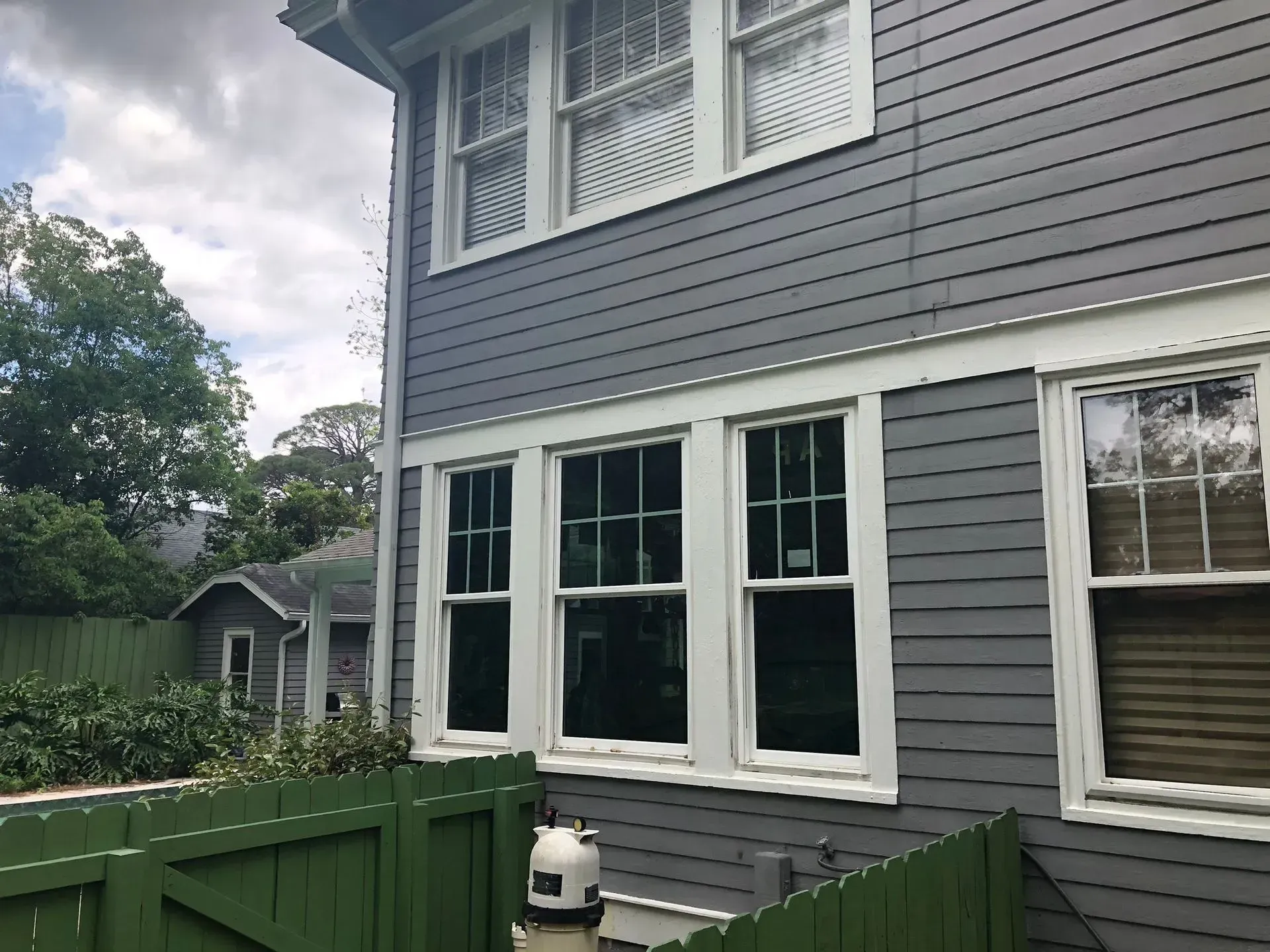
Quick Answer: A white, powdery film that rubs off on your hand when you touch an exterior wall is called chalking. It happens when ultraviolet light breaks down the resin, or binder, that holds paint pigment to the surface, and the pigment particles separate and rise to the top of the paint film. Light chalking is normal weathering and can often be washed away, but heavy chalking means the paint film has thinned past the point where it can still protect the substrate underneath. On stucco and fiber cement siding in Northeast Florida, where UV exposure runs high most of the year, chalking is usually the first visible sign that a repaint is coming due, not a one-time cleaning problem.
You run your hand along the sun-facing side of the house and pull it back covered in a fine white dust, like the wall just shed a layer of powder. Maybe it happened while you were pressure washing the patio furniture, or while brushing past the stucco on your way to the mailbox. Either way, your hand is now proof of something the paint has been trying to tell you for a while: it's breaking down.
That white residue has a name. Painters call it chalking, and on a Jacksonville-area home facing south or west exposure, it's one of the most common exterior symptoms you'll come across. It isn't dirt, and it isn't mold. It's the paint itself, degrading a layer at a time.
What Chalking Actually Is
Paint is made of pigment (the color) suspended in a binder (the resin that holds everything together and glues it to the wall). Ultraviolet radiation breaks the molecular bonds in that binder over time. As the resin degrades, it can no longer hold the pigment particles in place, and those particles rise to the surface and separate from the film. What you're feeling when you rub the wall isn't grime. It's loose pigment that used to be locked into a paint film.
A Normal Part Of Weathering, Up To A Point
Some degree of chalking is actually built into how exterior paint is designed to age. As the surface layer wears away in thin, even amounts, it exposes fresh paint underneath and helps the coating shed dirt. Manufacturers like Sherwin-Williams note that this self-cleaning chalk is considered an acceptable way for paint to weather, since it's the byproduct of the resin doing its job of absorbing UV energy instead of letting it reach the substrate.
Heavy Chalking Is A Different Story
When the powder is thick enough to leave a visible mark on your hand, your clothes, or the driveway below a wall, the binder has broken down well past the surface layer. At that stage, the paint film has thinned to the point where it's no longer providing full UV or moisture protection, and the color underneath often looks faded, dull, or uneven because so much pigment has already washed or rubbed away.
Your Home Looks Outdated or Hasn’t Been Painted in Years
Most homes need repainting every 5–10 years, depending on climate, paint quality, and surface type. If it’s been a long time or you’re noticing faded colors, worn trim, or outdated finishes, it’s time to refresh.
A modern color palette instantly updates your home, boosts curb appeal, and creates a warm and welcoming interior.
Why It Shows Up First on Stucco and Fiber Cement in Northeast Florida
Chalking isn't random. It concentrates on the surfaces and exposures that take the hardest UV hit.
South- And West-Facing Walls Chalk Fastest
These elevations absorb the most direct, high-intensity sun through the afternoon, which is exactly the exposure that accelerates binder breakdown. If you're only seeing chalk on one or two sides of the house, that's a strong clue it's sun-driven rather than a product or application defect.
Stucco's texture holds chalk longer than smooth siding
The porous, textured surface of stucco traps loose pigment in its grooves instead of letting rain wash it away as easily as it would on a smoother substrate like fiber cement or wood. That's part of why stucco homes in this region often show visible chalk residue sooner and more persistently than siding does, even under identical sun exposure.
Dark and saturated colors chalk more visibly
Darker pigments absorb more solar energy and run hotter on the surface, which speeds up resin breakdown. Deep colors like charcoal, navy, or terra cotta can show fading and chalking within a shorter window than lighter, higher-reflectance colors, even when the paint quality and prep were identical.
Lower-grade or interior paint accelerates the problem
Exterior-rated paints are formulated with UV inhibitors and flexible resins built to handle sun and humidity cycling. Interior paint, a low-grade exterior product, or paint that was over-thinned during application lacks that protection and will chalk noticeably faster than a properly specified 100% acrylic exterior coating.
Tip: Do a simple hand test on a few different walls before assuming the whole exterior needs attention. Rub your palm firmly across a section of wall at chest height on the north side, then do the same on a south- or west-facing wall. If the sun-exposed sides leave a heavy white residue and the shaded side barely does, you're looking at UV-driven chalking rather than a moisture or substrate problem, and that changes what prep and product the repaint calls for.
What Chalking Means for Your Repaint Timeline
Chalking on its own doesn't mean your house is failing. It means the clock on your current paint job is running out, and the amount of chalk tells you roughly where you stand on that clock.
Light, even chalk that wipes off easily usually means the topcoat is aging normally and you likely have some runway left before repainting becomes urgent, though it's worth keeping an eye on those sun-exposed walls going forward.
Moderate chalk that leaves a visible mark and returns quickly after washing signals the paint film has thinned enough that UV protection is compromised. This is typically the window where planning a repaint, rather than reacting to a bigger problem later, makes the most sense.
Heavy, persistent chalk paired with visible color fading or a dull, flat appearance means the paint has broken down substantially. At this stage, you're not just dealing with a cosmetic issue. The substrate underneath, whether it's stucco, fiber cement, or wood trim, has lost a meaningful part of its protective layer against Northeast Florida's humidity and driving rain.
Left unaddressed, heavy chalking eventually lets moisture reach the substrate more directly, which on stucco can contribute to surface erosion and on wood trim can allow rot to start. The paint isn't just decorative at that point. It's the barrier standing between your walls and the climate.
Why Painting Over Chalk Without Prep Fails Fast
This is the part that trips up a lot of well-intentioned repaint jobs: chalky residue is a bonding surface, and paint does not bond to loose powder.
New paint applied directly over chalk sits on top of that unstable layer instead of adhering to the substrate. Within a relatively short time, often just a season or two, the new coat can peel, flake, or streak away in sheets because it was never actually attached to anything solid. This is one of the most common causes of a repaint failing faster than it should, and it has nothing to do with the quality of the new paint itself.
Removing the chalk layer completely is the non-negotiable first step
That means a thorough wash, whether it's a controlled pressure wash or a chemical cleaner appropriate for the substrate, followed by a rinse and full dry time. On heavily chalked stucco, one washing pass often isn't enough. The surface needs to be checked again with a hand rub after it dries, because any remaining powder will undermine the new coat exactly the same way the first layer did.
A bonding or masonry primer stabilizes what washing alone can't reach
Even a thorough cleaning can leave microscopic chalk residue embedded in a porous surface like stucco. A primer formulated to penetrate and bind that residue creates the stable base the new topcoat actually needs, and it's a step that shouldn't get skipped just because the wall looks clean after washing.
WARNING: Skip the wash-and-primer sequence and paint directly over heavy chalk, and the failure won't be gradual. Expect visible peeling, patchy adhesion, or streaking within one to two seasons, concentrated on exactly the same south- and west-facing walls that caused the chalking in the first place. Repainting over unprepped chalk is one of the most expensive mistakes a homeowner can make, because it means paying for the same job twice.
What Holds Up Better Against Sun-Driven Chalking
Once the surface is properly prepped, product choice determines how long you go before this cycle repeats.
Higher-quality 100% acrylic exterior paint contains more resin solids and stronger UV-resistant binders than economy-grade products, which directly slows the rate at which the film breaks down under Northeast Florida's sun exposure.
Lighter, higher-reflectance colors absorb less solar energy at the surface, which keeps the wall temperature lower and reduces the thermal stress that accelerates both chalking and cracking. If a south-facing wall has chalked repeatedly in a dark color, shifting to a lighter shade on that elevation, even if the rest of the house stays darker, can meaningfully extend the repaint interval.
Elastomeric or masonry-rated coatings on stucco are formulated for the material's porosity and movement, and they resist the same UV breakdown mechanism differently than standard acrylic, though they call for their own specific prep and application approach to perform correctly.
Frequently Asked Questions
Is chalky paint the same thing as mold or mildew on my house?
No. Mold and mildew usually appear as green, black, or gray discoloration in damp, shaded areas. Chalking is a white or off-white powder that develops on sun-exposed surfaces and wipes away easily.
Can I just pressure wash the chalk away instead of repainting?
Pressure washing can remove loose chalk from the surface, especially when chalking is light. However, it cannot restore the paint film or UV protection already lost. Moderate or heavy chalking usually indicates repainting is necessary.
Does chalking mean the stucco underneath is damaged?
Not necessarily. Chalking primarily indicates deterioration of the paint film. However, prolonged heavy chalking can increase moisture exposure, so inspect stucco for cracks, softness, or other signs of substrate deterioration before repainting.
Why does one side of my house chalk more than the others?
Sun exposure is usually responsible. South- and west-facing walls receive stronger, longer periods of direct sunlight, accelerating binder breakdown. If shaded walls remain cleaner while sunny elevations chalk heavily, UV exposure is likely responsible.
How long does new exterior paint typically last before chalking becomes noticeable again?
The timeline depends on paint quality, color, preparation, and sun exposure. In Northeast Florida, quality acrylic coatings generally resist chalking longer than economy products or improperly prepared surfaces exposed to intense sunlight.
Will a darker accent color chalk faster than the rest of my exterior?
Usually, yes. Darker and highly saturated colors absorb more solar energy, causing surfaces to become hotter and accelerating binder breakdown. As a result, dark accents may chalk and fade sooner than lighter surrounding colors.
What Your Exterior Walls Reveal About Paint Aging
Chalky residue is one of the clearest early signs that exterior paint is wearing down under Northeast Florida’s intense sun and humidity. Checking those powdery areas now can help you distinguish normal weathering from a paint film that has become too thin to protect the surface effectively.
For homeowners in Bryceville and throughout Duval County, understanding that difference can make repainting more predictable. With 23
years of experience, Pristine Painting And Restoration
understands how stucco, Hardie, and wood exteriors respond to prolonged UV exposure, moisture, and seasonal weather changes. When chalking is addressed at the right stage, the next coating can be applied to a properly prepared surface and provide more dependable, longer-lasting protection.